
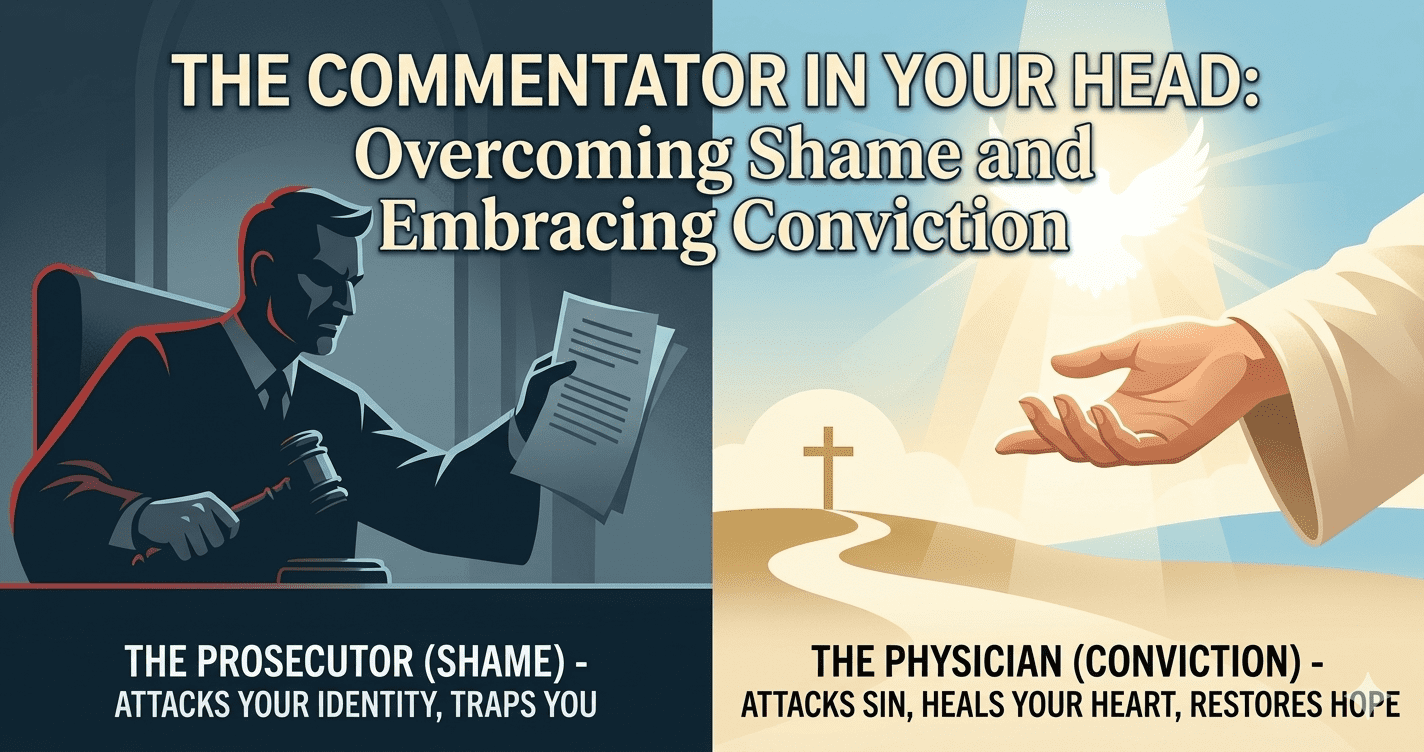
The Prosecutor vs. The Physician
There is a constant running commentary in your head. It judges your worth, picks apart your performance, and loops your worst moments on repeat.
Too many people mistake this internal critic for their own conscience. It isn’t. Revelation 12:10 calls the enemy the “accuser of our brothers and sisters.” That is a legal term. The enemy acts as a prosecutor, building a case to destroy your worth.
To survive the trial, you have to know the difference between the Prosecutor (Shame) and the Physician (Conviction).
The Anatomy of Shame
Shame is an attack on your identity. It doesn’t say, “You made a mistake.” It says, “You are a mistake.”
When shame hits, the focus is entirely inward. It’s a crushing weight that makes you want to hide in the dark. The language of shame is absolute, vague, and paralyzing:
- “You will always be like this.”
- “You never get it right.”
Because shame tells you that you are fundamentally flawed, your instinct is to run and hide. That is why shame is the enemy of repentance. You cannot run to God for help if you believe He is disgusted by you.
The Anatomy of Conviction
Conviction is entirely different. It is the tactical work of the Holy Spirit. It attacks the sin, specifically to save the person.
Conviction can hurt, but it is a sharp, surgical pain meant to heal. It is specific and actionable. It doesn’t crush you; it pricks your heart and points a clear way out:
- “That word you spoke was unkind. It damaged trust. Go and repair it.”
Conviction is fueled by hope. It assumes you are capable of change because you are a child of God acting out of character. It invites you to return to who you really are. 2 Corinthians 7:10 reminds us that godly sorrow brings repentance that leads to salvation, while worldly sorrow brings death. Shame traps you in the past. Conviction propels you into a better future.
The “No Condemnation” Zone
The ultimate defense against the accuser isn’t positive thinking. It is legal precedent.
“There is therefore now no condemnation for those who are in Christ Jesus.” — Romans 8:1
In a court of law, condemnation is the final sentence. It means the trial is over, the verdict is guilty, and the punishment is set. For a believer, the sentencing phase is already finished. Jesus took the sentence. When you hear a voice in your head declaring a final verdict—”You are hopeless” or “You are finished”—it is a lie. It is legally impossible for God to condemn you, because He already condemned sin in the flesh of Christ.
Practical Exercise: The Voice Check
The next time you hear an inner critic, put it through the “Voice Check”:
- Is it specific? God points to a specific action; the enemy attacks your entire being.
- Is it actionable? God gives you a step to take; the enemy paralyzes you.
- Is there hope? God offers restoration; the enemy offers despair.
If the voice fails this test, reject it out loud: “That is the voice of the accuser. I am not listening.”
The Way Forward
You have spent enough time listening to a prosecutor who hates you. It is time to walk out of the courtroom.
God is not looking for a groveling prisoner. He is looking for a son or daughter who is quick to admit their faults, quick to receive grace, and quick to get back to work.
The next time you fall—and you will—do not freeze. Do not hide. Let the conviction sting you, let it turn you, and let the grace of God wash over you. You are not defined by the accusations against you. You are defined by the Advocate who stands beside you.