
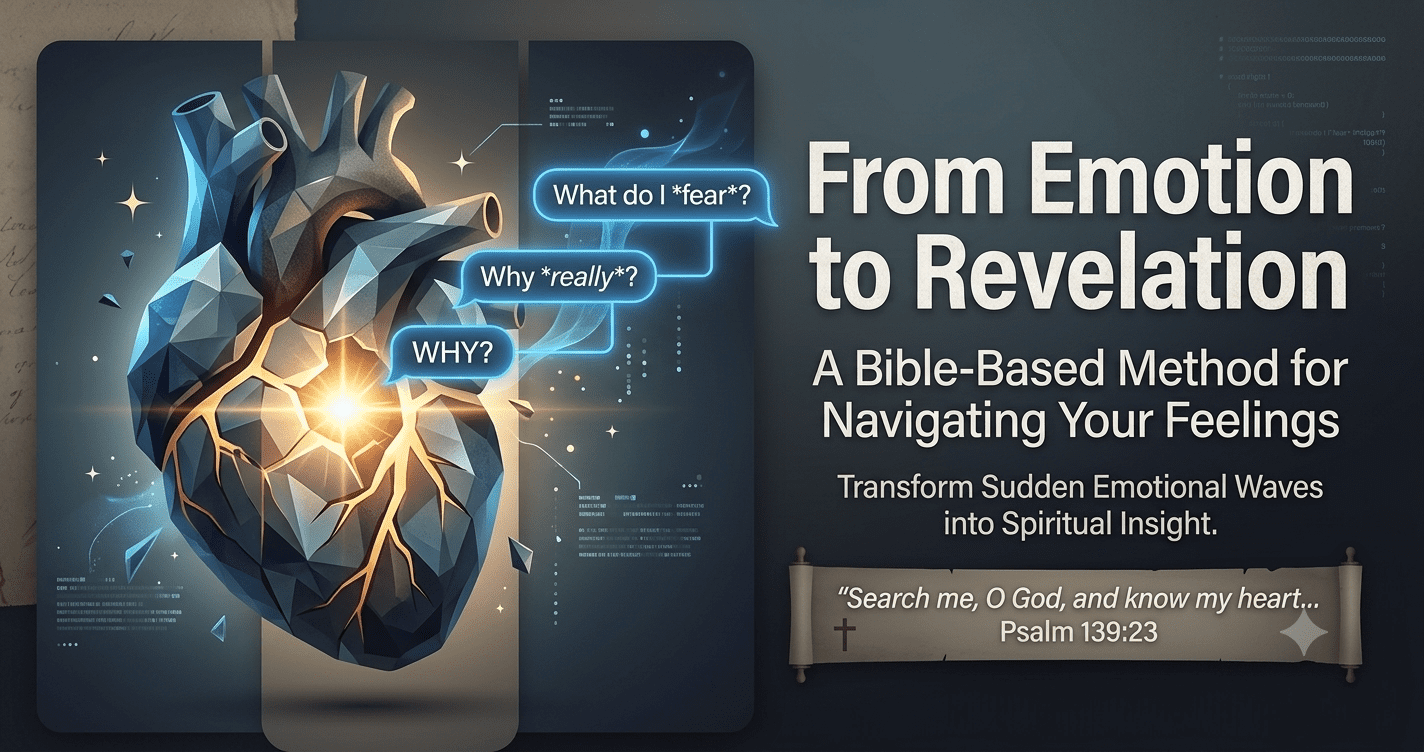
From Emotion to Revelation
Emotions are lousy compasses, but they make excellent diagnostic tools. When a sudden wave of anger, anxiety, or resentment hits you, the knee-jerk reaction is to let it drive, or try to smash it down. Both are mistakes.
The core issue is that we treat emotions as signals to act, rather than signals to investigate. They aren’t random disruptions; they are indicators pointing directly to what your heart actually trusts or fears.
The Three “Whys”
To get past the surface noise, you have to run a brutal, three-step interrogation of your own heart:
- Step One: Ask the First “Why?” Identify the immediate trigger. Why am I angry? Because the project failed.
- Step Two: Ask the Second “Why?” Move from the circumstance to the self-significance. Why does a failed project matter to me? Because my team might think I’m incompetent.
- Step Three: Ask the Third “Why?” Dig out the underlying demand or idol. Why does their opinion matter so much? Because I fear rejection and need their approval to feel secure.
What the Hustle Audit Reveals
When you drag these hidden demands into the light, you realize your intense emotional reactions are rarely about the present circumstance. They are about what you believe is ultimate.
Scripture cuts straight to the depth of this honesty:
“Search me, O God, and know my heart; test me and know my anxious thoughts.”
— Psalm 139:23
Once you name the root fear—whether it’s a fear of rejection, failure, or loss of control—it loses its power to blindside you. You stop fighting the circumstance and start handling the actual issue. It takes practice, consistency, and a willingness to look at the ugly stuff without blinking. But that’s how you find real peace in a loud world.